
Keeping learning going when emergencies close schools
UNICEF’s September 2026 analysis highlights the scale of disrupted schooling and why education belongs alongside other essential support.
A disruption is more than a missed lesson
UNICEF’s Learning Interrupted analysis, published in September 2026, found that climate hazards disrupted schooling for at least 171 million students in 2025. The report covers affected schools across 106 countries and territories. Three quarters of the students affected lived in low- and lower-middle-income countries.
The figures describe interruptions to education, not a single experience shared by every child. A school may close, a timetable may change, or lessons may become difficult to attend. Looking at the circumstances behind a headline helps supporters understand why the response needs to fit the place and the children involved.
Source: UNICEF: Learning Interrupted, school disruptions in 2025
Learning is connected to safety and stability
UNICEF’s guidance on education in emergencies explains that schools can provide more than instruction. Learning spaces may connect children with food, water, hygiene supplies, protection and psychosocial support. Education can also offer structure when displacement or a crisis has unsettled daily life.
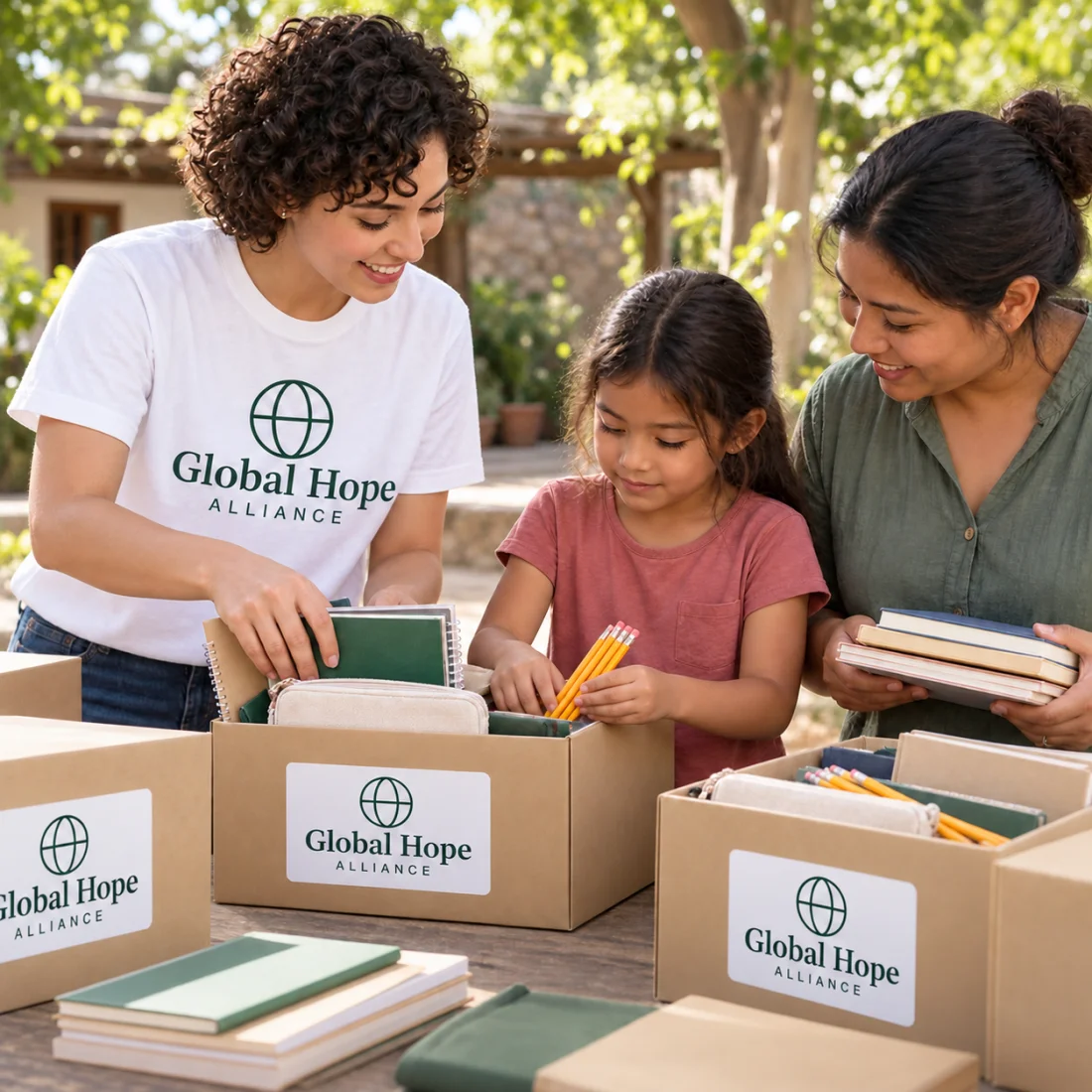
That guidance describes several elements of an education response: learning materials, trained teachers, safe places to study and coordination with existing education systems. A box of supplies may help, but it is only one element. Children also need a realistic way to use those supplies and continue learning over time.
Source: UNICEF: Education in emergencies
A place for education in charitable giving
Educational opportunity is one of Global Hope Alliance’s stated areas of focus. Understanding the wider context helps explain why learning resources sit alongside humanitarian assistance and community support in our mission.
When considering an education appeal, ask what obstacle it addresses. Is the need for materials, a safe study space, transport, or another clearly described resource? Ask who will use the support and how the activity fits with the learning already available. Specific answers are more useful than a broad promise to transform a child’s future.
Education deserves attention during recovery as well as at the height of a crisis. Keeping that longer view in mind helps supporters think about continuity, dignity and the everyday conditions children need to learn.